
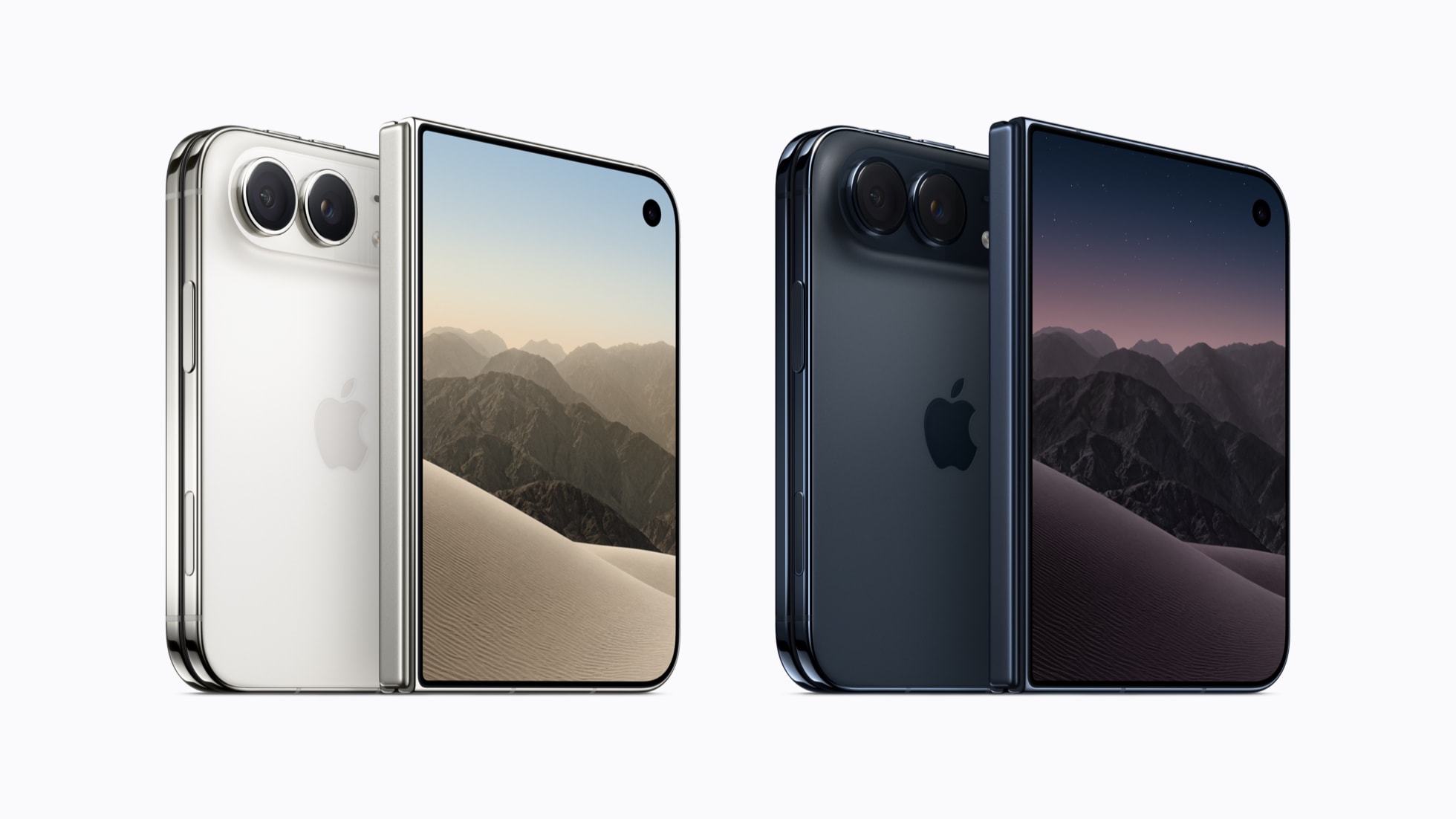
Header image: iPhone Duo in Star White and Night Sky. Image courtesy of Apple Newsroom.
Who is the iPhone Duo for? Should you get one?
Well, just like the Duo’s over-engineered hinge, it’s complicated.
I can see the appeal. An iPhone that unfolds into something closer to an iPad is pretty darn cool. But the more I look at it, the more I wonder which compromises I’d actually be willing to live with.
What Would You Miss?
If you’re coming from an iPhone Pro, there’s a decent list of things to consider. Comparing Apple’s specs for the Duo and 18 Pro, the Duo leaves out:
- The Action button
- Face ID (Touch ID takes its place)
- A dedicated telephoto lens
- Spatial photo capture
- Apple ProRAW
- The 18 Pro’s manual camera controls
- The Pro’s four studio-quality microphones
- LiDAR
It still has Camera Control and 2x optical-quality zoom from the main sensor. But if you’ve built habits around any of those missing features, will you miss them?
Maybe you’ve never touched ProRAW. Fair enough. Face ID, though? That’s something you might notice every single day.
Two Thousand Dollars Gets You What?
The Duo starts at $1,999 in the US. International pricing can make that an even tougher pill to swallow; the UK starting price is £1,999 (roughly US$2,700 at September 15, 2026 exchange rates). To be fair, the UK price includes VAT, while applicable US sales tax is extra.
So what are you gaining over a Pro?
A folding display, Split View with two apps side by side for the first time on iPhone, and an iOS experience built around both screens. Apple Pencil (USB-C) support is also coming later this year, according to Apple’s announcement.
Those are meaningful additions. The question is whether you’d use them enough to justify the price and the features you’re giving up.
Can It Replace Your iPhone and iPad?
Sure, it probably can. Depending on what you do with them.
I think plenty of people will still prefer an iPhone for iPhone things, and an iPad for iPad things. Others will love having one device that handles both. One less thing to charge and throw in a bag? I get it.
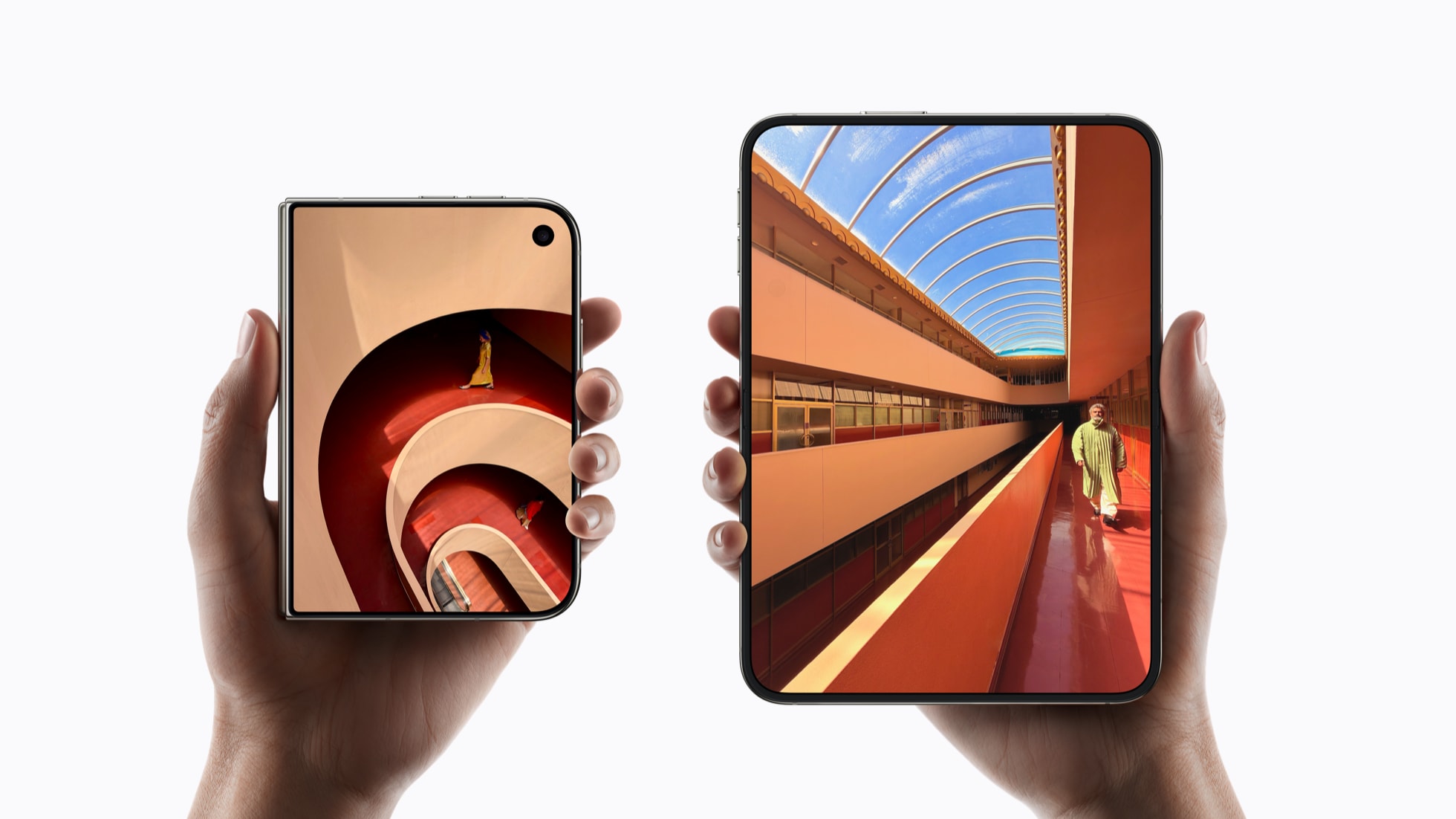
The Duo’s 5.4-inch outer display and 7.6-inch inner display. Image courtesy of Apple Newsroom.
But the sizing lands somewhere in between. Folded, it’s wider and thicker than an 18 Pro, despite having a smaller display. Unfolded, it’s still smaller than an iPad.
I also wonder how often I’d start something on the outer screen, then open the phone just to get more room. Comparing a couple of Safari pages, maybe? That could feel wonderfully convenient or become a little annoying. I haven’t used it yet, and I’m curious how that feels day to day.
Why Leave Out So Much Pro?
You guessed it. It’s complicated.
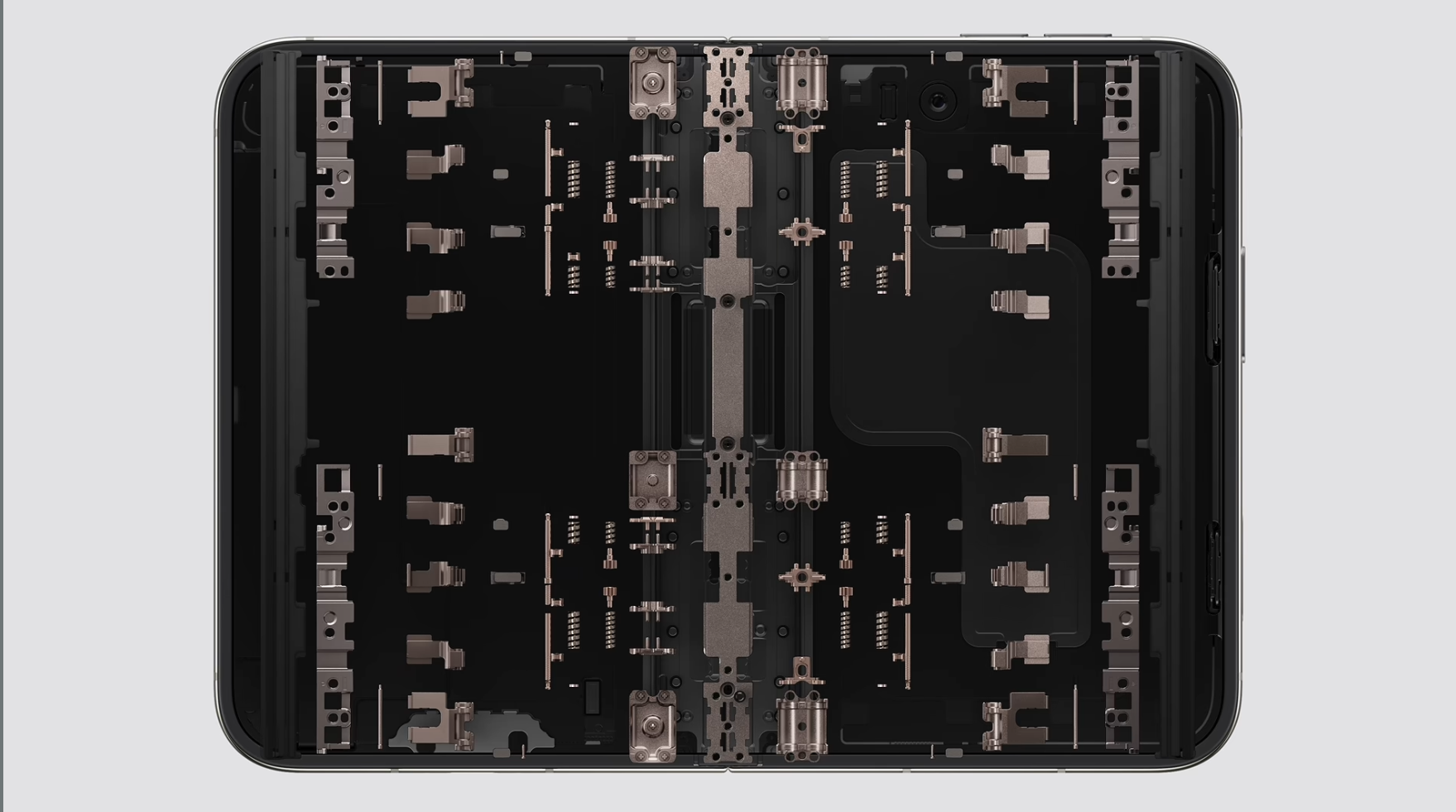
A lot going on in there. Screenshot from Apple’s September 9 event. Image: Apple.
My guess is that fitting all of this into a folding phone forced some decisions around space and cost. Even with those omissions, we’re still looking at a $2,000 device. Apple hasn’t explained each tradeoff, but that hinge certainly doesn’t look cheap.
And there’s a very Apple-looking upgrade path here. Add back a few Pro features with an eventual Duo 2 (Duo Duo?), and suddenly there’s an easy reason to upgrade. That’s speculation on my part, but there’s certainly room to grow.
A Complicated Gamble
Foldables are still a small part of the market: Counterpoint put them at 2.5% of global smartphone shipments in Q3 2025. Apple has to find enough people who want this combination of features and compromises to make the effort worthwhile.
Of course, Apple entering the category is itself a pretty big vote of confidence. I think the announcement alone will get people considering a foldable who never gave one a second thought before.
For the person who wants a little of both devices in one pocket, the Duo makes sense. How much sense depends on what they’re willing to give up.
What about you? Will you be getting an iPhone Duo?